
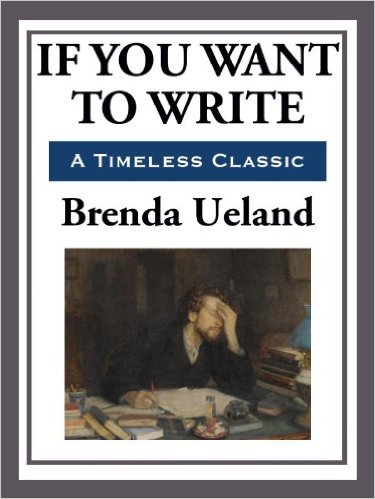
This was the first book that made me really, really want to be a writer. Before I read this book, I kinda, sorta wanted to write, but Brenda Ueland left me feeling that I actually could be a writer, and that feeling did more than anything else to give me the courage to actually give it a try.
On Writing: A Memoir of the Craft by Stephen King

Techniques of the Selling Writer by Dwight V. Swain
 When I began my writing career, I'd been an aspiring, hopeful, wannabe writer for years. I'd started and not finished more novels than I can possibly count. It wasn't until someone recommended that I read this book that I understood the basics of storytelling well enough to actually craft a story worth reading.
Over the years, many people have given us their spin on what Swain has to say, but for my money, this book trumps them all. Yes, some of the examples are a bit dated, but that doesn't matter. They hold up. They stand the test of time.
The Elements of Style by William Strunk, Jr. and E.B. White
 I think I would have to give up my writer's card if I left this book off the list. Yes, it was written a long time ago. Yes, the language is sometimes difficult for some to read and understand. Deal with it. The advice is sound. It has stood the test of time. If you aspire to be a storyteller of note, you'll buy this one, read it, and keep it handy at all times.
If you haven't read them, I encourage you to do so now. You won't regret it.
For years, I've shared quotes from this book with people who have taken my workshops on writing.
“The imagination needs moodling,--long, inefficient happy idling, dawdling and puttering. ” ― Brenda Ueland
It was this quote, more than probably any other, that made me believe, suddenly and with great awe and wonder, that I might be able to actually do the thing I wanted to do more than anything else:
"This is what I learned: that everybody is talented, original and has something important to say." --Brenda UelandI think that anyone with the creative spirit should read this book once every few years. It's time for me to read it again.
On Writing: A Memoir of the Craft by Stephen King

I'm going to confess here that I have never read a work of fiction by Stephen King, although after reading his book On Writing, I can't say why. His book about the craft of writing is so brilliant, I'm quite sure I'd appreciate his other work. King is unfailingly honest and realistic, sometimes uncomfortably so. This isn't a how to write book, it's straight-forward advice about how to approach your career.
“Amateurs sit and wait for inspiration, the rest of us just get up and go to work.” ― Stephen King, On Writing: A Memoir of the Craft
“If you don't have time to read, you don't have the time (or the tools) to write. Simple as that.” ― Stephen KingThis is another book I think we should all read again and again.
Techniques of the Selling Writer by Dwight V. Swain

Over the years, many people have given us their spin on what Swain has to say, but for my money, this book trumps them all. Yes, some of the examples are a bit dated, but that doesn't matter. They hold up. They stand the test of time.
“A story is the record of how somebody deals with danger.” ― Dwight V. Swain, Techniques of the Selling Writer
"I cannot give you the formula for success,” says Herbert Bayard Swope, “but I can give you the formula for failure: Try to please everybody.” ― Dwight V. Swain, Techniques of the Selling WriterThis book is an absolute must on my bookshelf. It's one I refer back to time and time again.
The Elements of Style by William Strunk, Jr. and E.B. White

“A sentence should contain no unnecessary words, a paragraph no unnecessary sentences, for the same reason that a drawing should have no unnecessary lines and a machine no unnecessary parts.” ― William Strunk Jr., The Elements of Style
“Form the possessive singular of nouns by adding 's. Follow this rule whatever the final consonant. Thus write: Charles's friend, Burns's poems, the witch's malice. ... The pronomial possessives hers, its, theirs, yours, and ours have no apostrophe. Indefinite pronouns, however, use the apostrophe to show possession: one's rights, somebody else's umbrella. A common error is to write it's for its, or vice versa. The first is a contraction, meaning "it is". The second is a possessive. It's a wise dog that scratches its own fleas.” ― Strunk Jr., William, The Elements of StyleI own many more books on writing. My shelves are filled with them, and some of them are very fine books. I've learned much from many people and I'm grateful to each of them for sharing what they've learned and how they learned it. I could fill endless blog posts with all the great books on writing I've run across over the years, and I may do a follow-up post later and do just that -- but if you want to know the books I must have on my shelf, on my e-reader, and near at hand at all times, these are the four that top that list.
If you haven't read them, I encourage you to do so now. You won't regret it.


